

Your role sits at the intersection of tools, data, and process. How do you decide what stays in the tech stack and what goes?
For us, it really comes down to ROI. Is it making a process better? Is it enhancing the selling experience? Is it equipping our team to be successful? We've actually cleaned up our stack a lot — removed a lot of duplicative tools. What we're looking to add now are solutions that solve for problems we don't already have covered. Every tool has to earn its place.
What was the business case and account planning process like before Fluint?
Very manual. Very time consuming. Our reps were building Word documents from scratch — outlining the prospect's problem statement, what they were looking to solve, how our solution could help. It was a lot of effort, and it pulled them away from actually selling. Fluint changed that completely. It takes what the prospect is saying and ties it directly to what matters most to them — their top concern, their use case — and it does it fast.
What makes Fluint different from other tools you've evaluated?
I don't really see a lot of competitors doing what Fluint does. What stands out is how it uses the prospect's own words — it picks up on what they're saying they want to solve, what the compelling event is, and maps it back to our specific value statements. It's not generic. And from an ops perspective, it's incredibly easy to set up and very customizable. It's not built for one industry or one use case. It works across the board.
You mentioned your SE team uses Olli for demo prep. Can you tell us more about that?
Our solution engineers love it. Before, they might be coming into a deal that already had two or three discovery calls. They'd have to listen to all of those recordings, go through email threads, try to piece together what the prospect actually needed. Now the prep document is right there in the opportunity. It captures the technical details — what integrations they need, what kind of environment they're running — everything the SE needs to tailor the demo. It saves them a ton of time and they go in sharper.
How are you using Fluint across the sales cycle beyond business cases?
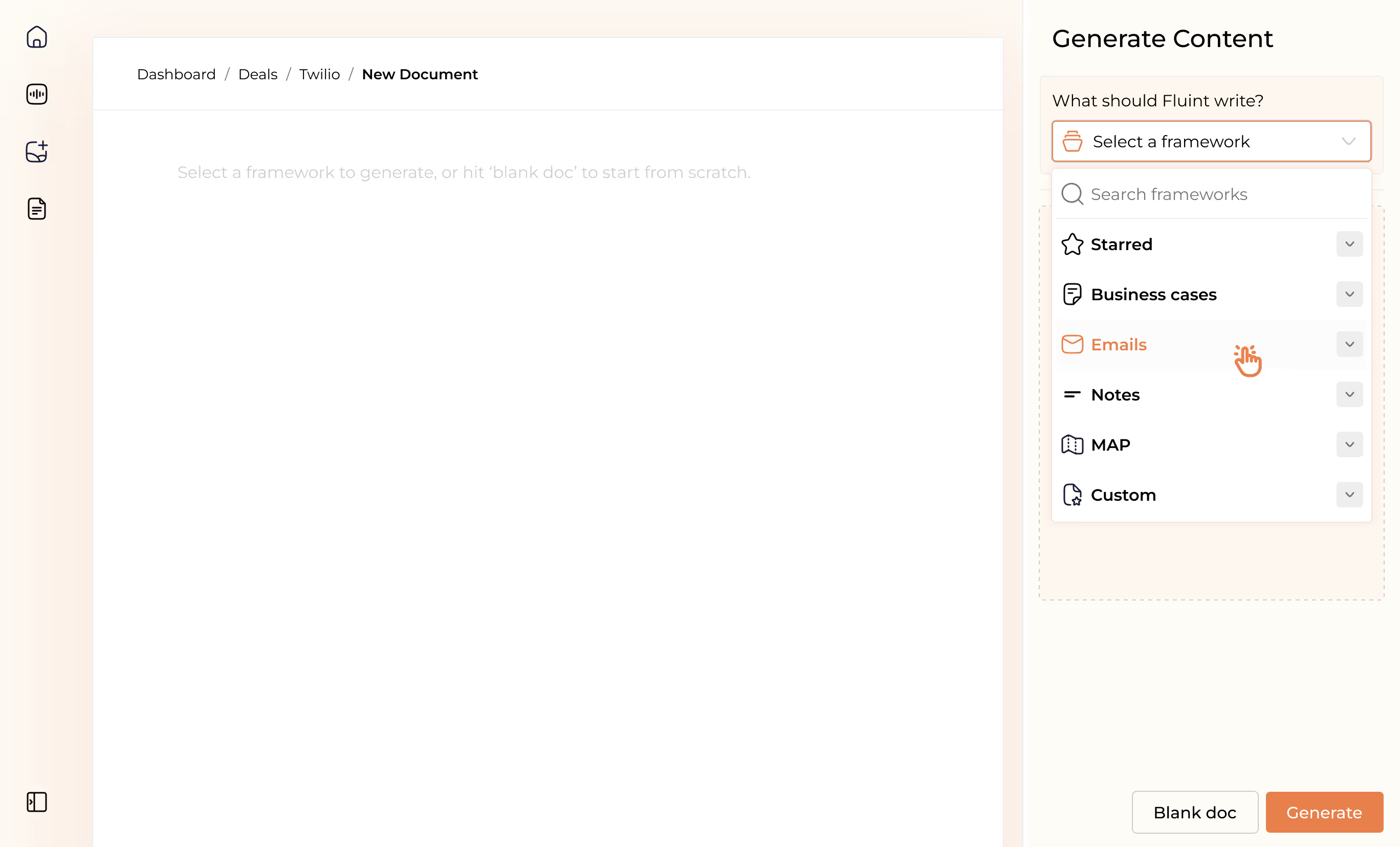
We use it for mutual action plans, SE demo prep, and account plans for expansion. We're also partnering with our marketing team to build out the content library — so when a rep is building a business case, Olli can pull in relevant case studies and customer testimonials that match the prospect's use case. One of our marketing team members who focuses on existing customer messaging isn't even on calls — she uses recorded calls to pull insights and build out account plans. It just makes everyone faster.
What do you think your sales leader Matt would say about the difference Fluint has made?
I think he'd say it makes the deal cycle faster. Because when reps spend less time on manual work, they have more time to sell. And Fluint speeds up the process at multiple stages — not just business case creation, but across the whole cycle. It's also helped with collaboration. We can share documents directly with prospects, see what they're editing, what they're looking at. We can actually work with them to refine the business problem together.
What would you tell someone in rev ops or enablement who's evaluating a tool like Fluint?
Save your sellers' time and they will sell more. That's the pitch. Fluint takes what was a very manual, very time-consuming process and automates it — so reps are spending more of their day generating revenue instead of building decks. It's easy to implement, easy to customize, and it's already proving itself in our stack.