


How AJ closes complex enterprise deals with Olli

Olli is the best writer. It's very much true to the spirit of what you're trying to get across — without the fluff that doesn't drive credibility with a contact.

AJ K., Strategic Account Executive

Background

AJ Kurtz is a Strategic Account Executive at Honeycomb.io, where he covers the financial services vertical. He's the kind of rep who obsesses over context and brevity in equal measure — deeply technical, methodical about cold outreach, and convinced that one great message beats a thousand mediocre ones.

Company

Honeycomb.io pioneered observability for engineering teams — helping companies like Netflix understand, in real time, exactly what's happening inside their software. Their sales motion is technical and complex: AE conversations happen with VP-level engineering and observability leaders across long cycles, often requiring deep contextual knowledge of a prospect's infrastructure goals before a deal can move.

The Deal

A demo with one of the biggest names in global fintech had gone sideways — the technical lead walked away thinking Honeycomb was moving in the wrong direction. AJ used Olli to help craft exactly the right follow-up: a message that acknowledged the misstep, surfaced what they'd gotten right, and rebuilt the relationship. Three days of work, one well-placed note, and months later he was having dinner with that director in Seattle.

What would you say to someone who is considering selling with Fluint?

"I give it the full breadth of what might move the needle — call recordings, meeting notes, LinkedIn context — and Olli helps me boil it down into something a busy executive is actually going to read."

The meeting had not gone well. A technical lead at one of the biggest names in global fintech watched Honeycomb's team demo features he was already walking away from — and said so. AJ Kurtz had one shot to recover the relationship, and it had to land perfectly.

Before Olli: Brute-Force Context

AJ is a strategic AE focused almost entirely on cold outreach. No pool of warm inbounds, no repeat-purchase motion — just the daily work of getting the right message in front of the right executive at the right moment. Before Olli, that meant hours of manual synthesis: reading LinkedIn profiles, archiving blog posts, stitching together call notes, then sitting down to write something that didn't sound like every other email in the prospect's inbox. Quality over quantity was already the philosophy. The bottleneck was time.

Then he started working with Olli.

The Olli Experience: Speed Without Sacrificing Judgment

The shift wasn't about offloading the thinking — it was about offloading the synthesis. AJ still identifies the right context: the prospect's LinkedIn presence, recent posts, past call transcripts, Gong recordings. But instead of spending hours turning that raw material into a tight five-sentence LinkedIn message, he hands it to Olli. "Olli is the best writer," he'll tell his team. Not because it's the flashiest LLM — because it stays professional, stays true to the message, and doesn't try to be clever when clever isn't what closes deals.

That distinction matters in his market. Executives at financial services firms aren't looking for witty openers. They're looking for someone who actually understands where they're going. Olli gives AJ the output that gets him close to right on the first pass — and that changes the economics of outreach at scale.

The Playbook: Context First, Always

AJ runs two main Olli plays. The first is account plans — dropping in deal history, call recordings, and desired outcomes to generate a starting framework that he then edits down into something precise. The second is LinkedIn messaging. When he's earned a direct connect with a target executive, he treats it like one shot. He loads Olli with everything he knows about that person — their team's conversations, the initiatives they're tied to, the signals from job postings or public posts — and asks for a message that's brief enough to actually get read. For Honeycomb's observability day in New York, that playbook helped him get five target accounts in the room and into real conversations with Honeycomb executives.

The Human Layer: What Olli Can't Do

The fintech recovery story is the clearest example of what AJ brings that Olli can't. It was three days of thinking — understanding exactly how this director's technical priorities had evolved, where Honeycomb's demo had created the wrong impression, and what would actually rebuild trust with someone of that caliber. Olli helped sharpen the message. But the judgment — what to say, what to own, what to reframe — that was AJ. "I always go in and edit after the fact," he says. "There's never a situation where it's totally baked." The tool is a multiplier. The rep is still the rep.

"Get the full breadth of what might move the needle," he'll tell anyone who asks. Then let Olli help you get it down to something a busy executive is actually going to read.

Using Fluint Q&A

We sat down with AJ to dig into how Olli fits into his daily playbook — from crafting cold outreach to rebuilding relationships after a deal goes sideways, to prepping for high-stakes onsites.

What's the biggest challenge in your role as a strategic AE?

My whole job is essentially cold outreach — I only have one existing customer today. And the hard truth is that quantity doesn't work. You can spam a thousand emails and get nothing. The reps who win are the ones who find a way to be brief and specific and actually relevant to the person on the other end. That's the muscle I'm always trying to sharpen.

What was your process like before using Olli?

It was mostly brute force. I'd go to a LinkedIn profile, read through everything they'd posted, look at their blogs, stitch together notes from previous calls — and then sit there trying to synthesize it into something that sounded human. It worked, but it took forever. The thinking was all mine. Now I can hand that synthesis layer to Olli and actually get some time back.

How do you use Olli day to day?

A lot of LinkedIn. Once I get a direct connect, I know I might only get one shot at a message. So I'll put the context into Olli — what I know about this person, what we've discussed with people on their team, what initiative they're tied to — and ask it to help me nail the message in five sentences or less. Olli's the best writer on my team for that kind of thing. Other LLMs get too cute, too confident. Olli stays professional and stays on point.

Tell me about a specific deal where Olli made a difference.

The fintech one stands out. We'd had a really rough first call — our technical lead showed them stuff they were moving away from, and their response was basically "I don't think we're headed in the same direction." That's a breakup email. I spent three days researching this person, understanding exactly where they were going, and used Olli to help me draft a response that acknowledged where we went wrong, but also reframed what we got right. It worked. We rebuilt the relationship, and I just had dinner with that director and one of his peers in Seattle last month.

How do you use Olli for onsite prep?

Before a recent onsite at one of their satellite offices, I uploaded a full list of everyone who was going to be in the room — the head of AI engineering, their peers, the whole group. I had call recordings in there, context on the deal, what we were trying to accomplish in the meeting. I asked Olli to give me a starting point for the deck and the talking points. If I hadn't had Olli for that, I would've lost my whole weekend. Instead I got it knocked out and actually got to talk with my parents on the flight out.

What would you tell a skeptical rep who hasn't tried Olli yet?

Olli's competitive advantage is context. You can plug in your Salesforce notes, your Gong transcripts, your call recordings — all of it. The output is only as good as what you put in, but when you put in the right context, you get messaging that actually sounds like you. You're not spending an hour cutting the fluff. You're getting something close to right out of the gate, and then you put your own spin on it.

Treat every account like a key account, with Fluint

Put Fluint to work in a deal you're currently working on, and if you’re not happy with the platform for any reason in your first 30 days — we’ll refund you.

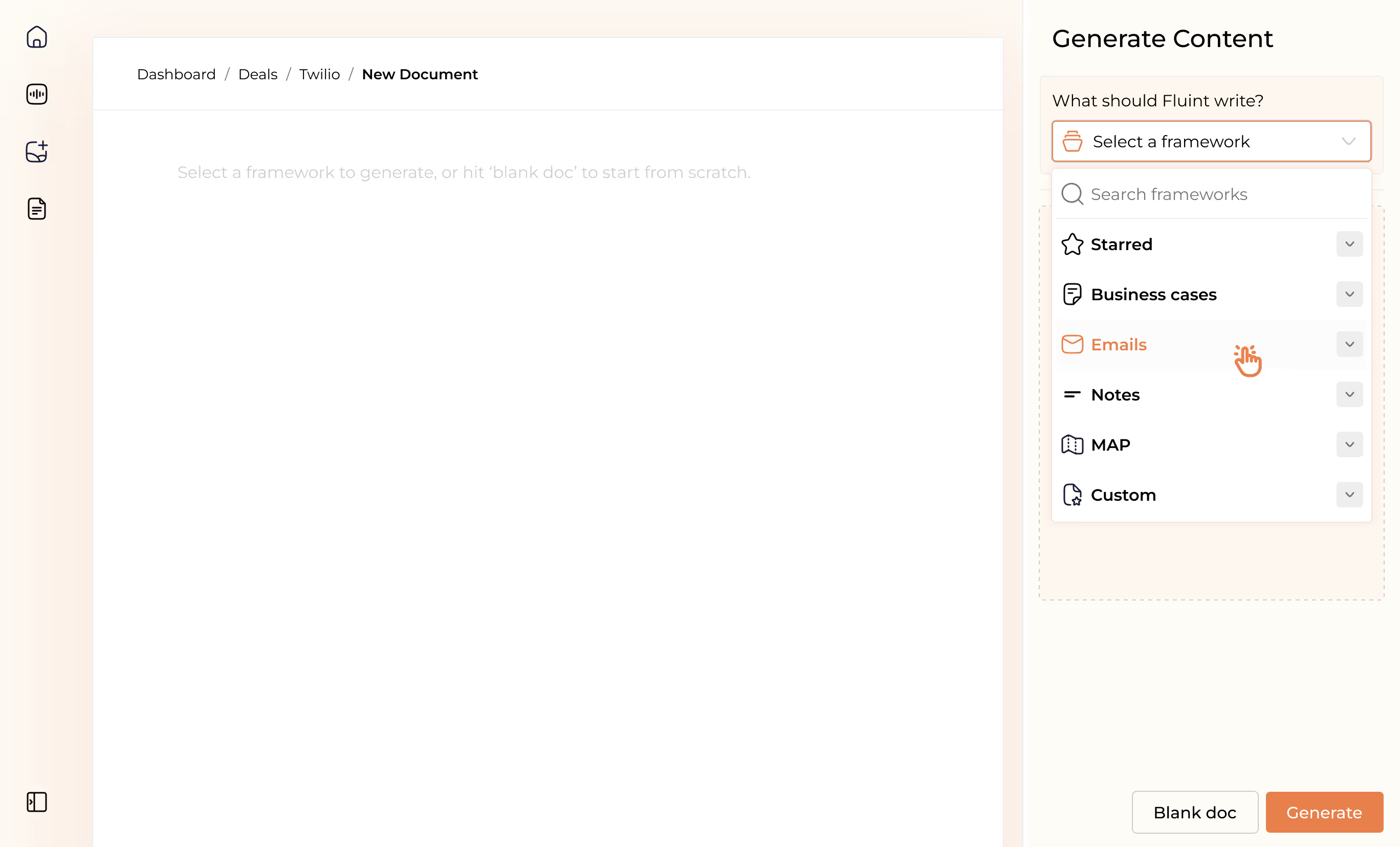
A UI sidebar for "Generate Content" allowing a user to select a framework, categorized by "Starred," "Business cases," "Emails," "Notes," "MAP," and "Custom," with an option to start a "Blank doc."

More case studies

Fluint users winning with more calm, less chaos: