How AI Transforms Sales Enablement Frameworks




TL;DR
- Traditional sales enablement frameworks break at execution: static content, low adoption, stalled deals
- AI turns enablement into a live execution engine, delivering guidance and outputs inside real deals
- The future of enablement isn’t libraries or training—it’s in-workflow systems that help reps close
What exactly is a sales enablement framework? The strategic, ongoing discipline of providing your revenue teams with the resources they need to close deals effectively.
That’s it. It’s not just sales support handing over a battlecard. It’s not sales ops managing the CRM. And it's not a new tool you just bought. Enablement is a cross-functional operating system that involves sales, marketing, and customer success, all aligned on a single goal: improving sales execution and productivity. It's a continuous process, not a one-time project.
Why Sales Enablement Frameworks Are Breaking Down Now
Frameworks look great on a whiteboard. In the real world, they’re failing. The problem isn’t the theory; it’s the execution drag.
Buyers have changed. They educate themselves before ever speaking to a rep and bring a committee of stakeholders to every deal. Your old playbooks can’t keep up. Meanwhile, you're looking at quota attainment, productivity metrics, and sales cycle lengths, wondering why they aren't improving. It’s because your enablement framework creates friction. Reps can't find the right content, training doesn't stick, and the entire system slows down adoption of the very behaviors you need to win.
The Canonical Pillars of a Sales Enablement Framework
Every consultant will sell you a blueprint with the same core pillars. You’ve seen the slide deck. It looks structured and clean, promising a perfect system if you just follow the steps.
It usually includes:
- Content Management: Playbooks, battlecards, case studies, and email templates gathering dust in a portal.
- Training and Coaching: Onboarding programs, annual kickoffs, and certifications that are forgotten by the next quarter.
- Technology and Tools: The CRM, enablement platforms, and now, AI assistants that are supposed to make everything easier.
- Metrics and Performance Measurement: Dashboards tracking lagging indicators long after a deal is lost.
- Cross-functional Alignment: A recurring meeting where marketing and sales agree to disagree.
- People, Process, and Ownership: A RACI chart that no one looks at after it's created.
Acknowledging this structure is fine. Believing it’s a solution is the first mistake.
Where Traditional Enablement Frameworks Go Wrong
The blueprint fails in reality. It breaks down at the point of execution. The primary point of failure is adoption. Reps ignore the portal, skip the training, and work around the process because it’s faster than following the rules.
This isn't a "people problem." It's a system problem. The framework demands reps stop selling, go find a resource, learn it, and then apply it. That’s not how sales works. The result is a failure of change management because the change you're asking for is inefficient. Clear roles and ownership don't matter if the process itself is fundamentally flawed and disconnected from a rep's daily workflow.
How AI Rewrites the Sales Enablement Framework
AI doesn’t just add a new layer to the old framework. It shatters it and replaces it with something that actually works. It closes the gap between theory and execution.
Instead of static content, AI delivers adaptive guidance. Instead of one-size-fits-all training, AI-powered coaching analyzes real conversations and provides personalized feedback. It creates custom learning paths for reps based on their actual performance, not a generic curriculum. AI isn’t just an automation tool; it’s a continuous improvement mechanism embedded directly into the sales process.
From Frameworks to Execution Engines
Stop thinking in terms of "frameworks." Start thinking in terms of "execution engines." A framework is a static plan. An engine is a dynamic system that does work. AI transforms enablement from a library of resources into a live, intelligent engine that helps reps execute the right actions, at the right time, in every single deal. It’s about doing, not just knowing.
What Modern Sales Enablement Actually Delivers
Enablement is no longer about distributing knowledge or compiling resources. The real value comes from what gets created and shipped inside live deals. Modern enablement systems are finally producing actions—artifacts that move opportunities forward, not just theoretical readiness. That’s execution enablement in practice.
From Static Assets to Runnable Frameworks
Traditional enablement drops a PDF or a playbook and wishes the rep luck. The translation work—turning that knowledge into something usable—gets shoved onto the team. Runnable frameworks are different. They execute inside the rep’s workflow, producing relevant outputs at the exact moment of need. This is why adoption jumps: enablement doesn’t get left behind; it shows up where the deal actually happens.
Examples of Enablement Frameworks That Run
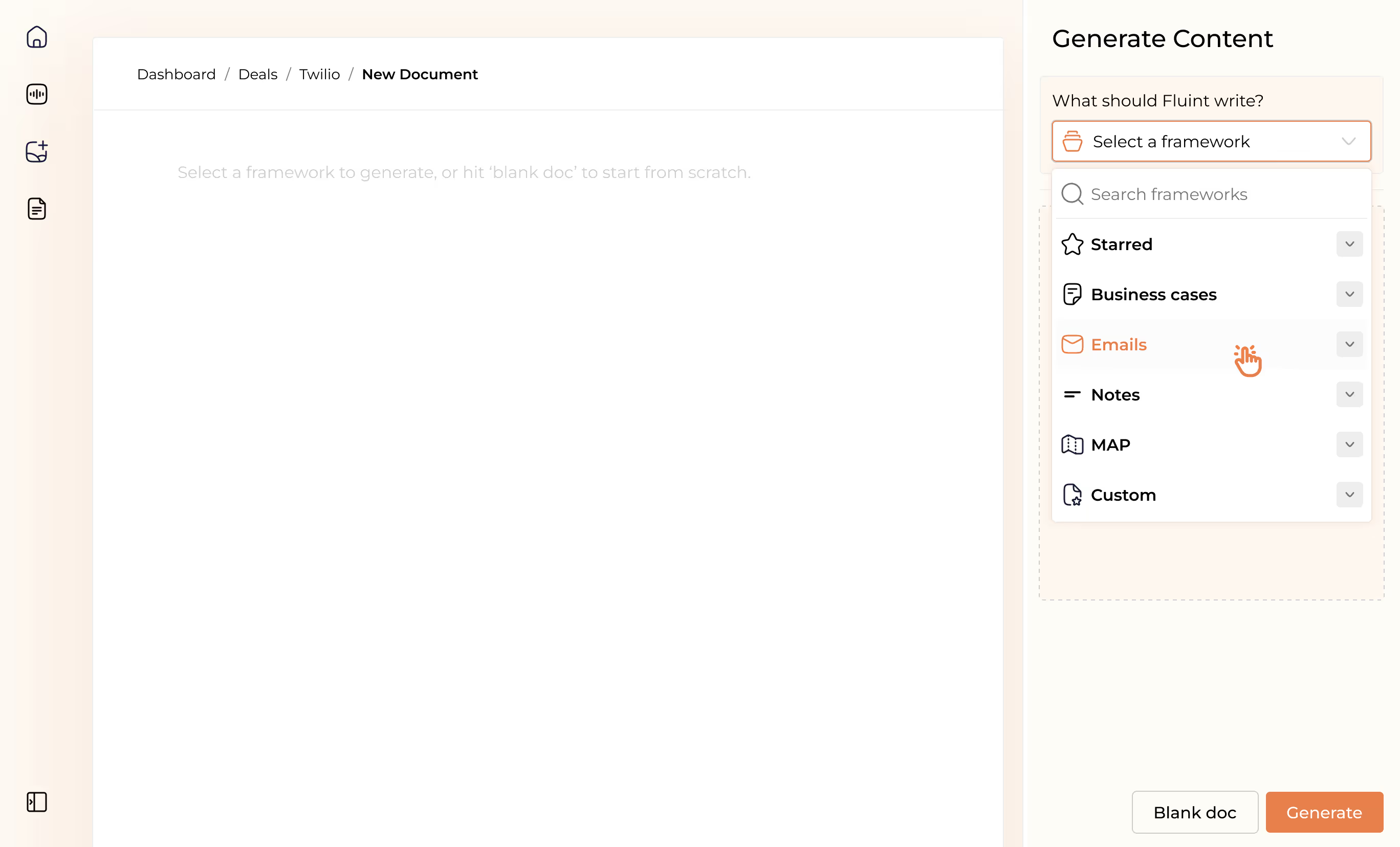
Here’s what running sales enablement frameworks look like inside Fluint:
- 1-Page Business Case for exec buy-in: Used at the late-stage deal review, it spits out a crisp business case—executive-ready and grounded in concrete numbers—not a generic template. This is what decision makers actually want.
- 4-Sentence Soundbite to show what's changing now: Used in outbound or discovery. The output is a punchy, repeatable narrative sales leaders can actually deploy, drawn from the real impact, not just an aspirational pitch.
- Strategic Deal Review to change outcomes: Drops in when deals stall. The output isn’t just feedback—it’s a reframed strategy, clarifying next steps and obstacles, so the deal moves.
- Account-Based Sales Playbook to stop mid-funnel stalls: Instead of a broad-brush template library, this produces a focused sequence, custom-fitted for the account’s context, to shake out blockers and drive action.
All of these frameworks are tactical: they produce something that gets used, not just filed.
Why This Still Counts as Sales Enablement
Let’s be clear: this is still enablement. It just cuts the noise. These frameworks hand reps guidance, structure, and tangible support. That means less time searching or translating, more time actually selling. Enablement moves from “prepare” to “execute.” No more guesswork, no more wasted cycles.
What Gets Standardized vs What Stays Flexible
The structure is locked. Quality guarantees are non-negotiable. But language, order, and account context are flexible. Reps aren’t forced through a maze of process for its own sake. They get high-quality outputs tailored to each deal. That’s how you scale without sacrificing relevance or speed.
A modern enablement system isn’t one-size-fits-all. It’s a set of proven standards, delivered flexibly, so reps can do the work that actually closes deals.
Now—when you’re evaluating enablement systems, the criteria shift. Don’t settle for a content repository or more shelfware. The next section lays out exactly what to look for in a platform that can keep up.
Decision Criteria for a Modern Sales Enablement Framework
When evaluating a modern, AI-driven approach to enablement, the criteria change. You’re no longer just buying a content repository or a training module. You’re investing in an operational system.
Your team expects and needs technology that is embedded directly into their workflow. It has to work inside the tools they already use, like their email and CRM. It must integrate seamlessly. And it must be able to scale, supporting a team of ten as effectively as a team of a thousand, without requiring a complete overhaul as your complexity grows. If it requires reps to change their entire process, it's already failed.
Measuring Whether a Sales Enablement Framework Actually Works
You can keep tracking the same old KPIs: win rate, conversion rate, quota attainment, ramp-up time, and content utilization. These are lagging indicators. They tell you what happened last quarter.
A working enablement system impacts leading indicators. Are your reps engaging the right stakeholders? Is the quality of their discovery and communication improving? Are they building business cases that resonate with executives? AI makes this measurable. It provides visibility into the execution quality of your team in real-time. You should still track the outcomes, but your focus should shift to the daily activities that produce those outcomes. This allows for continuous review and iteration, not an annual post-mortem.
The Future of Sales Enablement Frameworks
The future isn’t another buzzword like "buyer enablement" or "revenue enablement." It’s not about finding the one perfect platform that consolidates your tech stack.
The future is about execution. It’s about continuous readiness, not just one-time certification. It’s about an enablement function that is invisible to the rep because it’s woven directly into their day-to-day work. The framework of the future is no framework at all. It's an intelligent, automated system that makes every rep better by default, driving performance without the friction of traditional enablement.
Tired of Frameworks That Don't Work?
Enablement shouldn't be about managing content and processes. It should be about winning deals. If your reps are stuck doing low-value work instead of selling, your framework is broken.
I handle the execution—the business cases, the executive summaries, the stakeholder analysis—that moves deals forward. I provide live, intelligent guidance so your team can focus on what they do best: closing. Let's make enablement about results, not just reports.
Olli Turns Enablement Into Execution
Most enablement tools stop at preparation. I don’t.
I’m Olli, Fluint’s AI sales assistant. I work inside live deals to generate the things reps actually need to move opportunities forward: business cases, executive summaries, stakeholder narratives, and clear next steps. No portals to search. No frameworks to interpret. Just execution, delivered in context.
If your enablement framework looks good on paper but breaks in practice, it’s time to upgrade it into an execution engine. That’s what I do. Let’s talk.
FAQ's on:
AI sales enablement frameworks
It’s a strategic approach to giving your sales team the tools, content, and training they need to sell effectively. A modern framework moves beyond static resources to provide real-time, in-workflow guidance.
A proper structure is important because it aligns your entire revenue organization—sales, marketing, and success—around improving sales execution. Without it, efforts are siloed, resources are wasted, and reps are left to figure things out on their own, hurting productivity and quota attainment.
A dedicated enablement leader or team usually owns the framework, but its success depends on cross-functional collaboration. Leadership in sales, marketing, and operations must all have a stake in its development and adoption. Ultimately, accountability lies with the person responsible for sales productivity.
Adoption fails when the framework creates more work. The key is to embed enablement directly into the rep's existing workflow. If guidance, content, and coaching are delivered in the context of an active deal, adoption becomes seamless because it helps them win.
The ROI is measured in core sales metrics: increased win rates, higher quota attainment, shorter sales cycles, and faster new hire ramp time. With AI, you can also measure leading indicators like the quality of rep activity and engagement, providing a clearer line between enablement efforts and revenue results.
Why stop now?
You’re on a roll. Keep reading related write-up’s:





Draft with one click, go from DIY, to done-with-you AI
Get an executive-ready business case in seconds, built with your buyer's words and our AI.
Meet the sellers simplifying complex deals
Loved by top performers from 500+ companies with over $250M in closed-won revenue, across 19,900 deals managed with Fluint

Now getting more call transcripts into the tool so I can do more of that 1-click goodness.



The buying team literally skipped entire steps in the decision process after seeing our champion lay out the value for them.


Which is what Fluint lets me do: enable my champions, by making it easy for them to sell what matters to them and impacts their role.

