How AI sales agents upgrade your sales playbooks




TL;DR
Your sales playbooks are decaying because they rely on human memory and perfect timing. AI sales agents move playbooks from static docs to live execution—autonomously running qualification, outreach, and follow-ups. Stop judging agents by the content they find; judge them by the plays they finish.
Sales playbooks are built on a flawed premise: that humans will behave like machines. They assume your reps will consistently execute every step, for every lead, every single time. Prospecting, qualification, follow-ups, routing—it’s all documented with the expectation of perfect, uniform adherence.
This is where reality intervenes. Failure isn't a bug; it's a feature of manual execution. Deals stall because of missed follow-ups. Qualification is inconsistent from one rep to the next. Speed-to-lead suffers because of delayed responses. CRM hygiene becomes an afterthought, corrupting your data and your forecasts.
Every minute a rep spends on administrative tasks or switching between ten different browser tabs is a minute they aren't selling. This cognitive load directly undermines playbook adherence. The problem gets worse in high-volume environments or with complex, multi-threaded deals where the number of moving parts overwhelms manual capacity. Your playbook isn't failing because the strategy is wrong. It's failing because the execution model is broken.
What AI sales agent software actually does
AI sales agent software is a system that autonomously executes sales tasks—like outreach, qualification, scheduling, routing, and CRM updates—by reasoning and acting on your behalf within your existing workflows.
Why playbooks are being rebuilt now, not later
The pressure to rebuild playbooks isn't theoretical; it's a direct response to market conditions. Expectations for deal velocity have compressed. Speed-to-lead is no longer a best practice; it's a basic requirement for survival. If you aren't engaging a lead in minutes, your competitor is.
At the same time, buyers expect timely, personalized engagement across an expanding number of channels. Generic, one-size-fits-all outreach is ignored. This demand for tailored communication at scale creates a paradox that human teams cannot solve on their own.
The final piece is the technology itself. Agentic AI capable of planning, acting, and self-correcting across workflows is no longer science fiction. It’s available now, making it possible to operationalize playbooks in a way that was previously impossible. The convergence of these factors means rebuilding is not an option for the future—it’s a necessity for right now.
What traditional playbooks assume (and why those assumptions break)
Traditional playbooks operate on a set of assumptions that collapse under the weight of real-world sales.
They assume reps will consistently research prospects, personalize every message, follow up on a precise schedule, and log every activity accurately in the CRM. This is a fantasy.
They assume that providing reps with enablement content—scripts, templates, battle cards—is the same as ensuring execution. It isn't. Access to a library does not guarantee the right book is read at the right time.
They assume that a quarterly training cadence can keep pace with the evolving complexity of deals and buyer behavior. It can't.
These assumptions break down most spectacularly where the stakes are highest: in complex enterprise sales, high-volume outbound prospecting, and critical inbound response handling. The system is designed for an ideal state, not the chaotic reality of a sales floor.
How AI sales agents upgrade playbooks instead of replacing them
AI sales agents don't throw your playbooks away. They ingest them and turn them into decision logic. The playbook becomes the strategic input that guides the agent's autonomous actions. The agent interprets signals from your CRM, email, and other data sources, selects the appropriate play, and then executes it without manual intervention. This covers the full cycle of outreach, qualification, engagement handling, meeting scheduling, and lead routing.
From static rules to dynamic execution paths
An agent-powered playbook isn't a static document; it's a dynamic system. The agent uses conditional logic based on real-time signals. It analyzes engagement data, ICP fit, and buyer behavior to determine the next best action. Did a prospect open an email three times but not click? The agent can trigger a specific follow-up. Did a lead from a target account visit the pricing page? The agent can escalate it to an AE immediately. This creates a continuous feedback loop where the system adjusts its execution based on what’s actually working.
From rep discretion to system-guided action
This approach reduces alert fatigue and decision overload for your reps. Instead of a firehose of notifications, reps receive qualified, engaged leads ready for a human conversation. The system enforces the playbook, ensuring consistency and quality at the top of the funnel. For edge cases and complex negotiations where human nuance is critical, reps can always step in. It’s not about removing humans; it’s about deploying them where they create the most value.
Expected components of agent-powered playbooks
An effective agent-powered playbook is built on four core components working in unison.
- Data Ingestion and Enrichment: The agent must have access to a rich, unified view of the customer. This means ingesting and processing data from your CRM, email and calendar systems, product analytics, and third-party enrichment sources.
- Decision and Prioritization Logic: This is the brain. Using your playbooks as a guide, the agent applies logic for lead scoring, ICP matching, and intelligent routing. It determines which leads get attention, when, and from whom.
- Execution Layer: This is where the work gets done. The agent autonomously crafts and sends personalized messages, executes multi-step follow-up sequences, handles initial engagement, schedules meetings, and logs all activity back to the CRM.
- Analytics and Learning Loops: The system must track its own performance and learn. By analyzing what actions lead to positive outcomes, it continuously refines its decision-making logic over time.
Underpinning these components are technologies like Natural Language Processing (NLP) for understanding communications, Large Language Models (LLMs) for reasoning and generating messages, and predictive analytics for forecasting outcomes.
What changes for sales leaders when agents run the playbook
When AI agents execute your playbooks, your role as a leader fundamentally shifts. You stop chasing compliance and start managing a system. Consistency is achieved through the agent's programming, not through constant rep supervision.
Your focus moves from micromanaging individual activities to architecting workflows, setting qualification thresholds, and defining standards for engagement. This allows for unprecedented scalability across your SDR, AE, and RevOps functions, as the system can handle volume without a linear increase in headcount.
Coaching moves upstream
Your coaching model evolves. Instead of dissecting individual calls or emails after the fact, you start coaching the agent's logic. You work with your team to optimize the patterns of behavior across all deals and reps. You’re no longer fixing one-off mistakes; you’re improving the entire system, making every rep more effective by default.
How to evaluate AI sales agent software for playbook execution
When evaluating AI sales agent software, don't get distracted by a long list of features. Ground your assessment in execution capability. Focus on operational fit, the depth of its integrations, and the level of control it provides.
Can the agent act without being prompted?
The key differentiator is autonomy. Does the tool simply assist reps by surfacing information, or can it act independently? An agent should be able to manage follow-ups, handle initial inbound responses, and qualify leads without requiring a human to initiate every action. The less prompting required, the more leverage you gain.
Does it operate inside live workflows?
The agent must be a native part of your sales process, not a bolt-on application. This means a deep, bi-directional sync with your CRM. It should read data, execute tasks, and write activity back in real-time. If it can't log its own calls, emails, and dispositions, it’s creating more administrative work, not less.
Can it enforce standards without slowing deals?
An agent is useless if it's slow. Evaluate its latency, its impact on speed-to-lead, and its execution reliability. The system should enforce your standards for qualification and data hygiene without becoming a bottleneck. Demand transparency and explainability. You need to understand why the agent took a specific action so you can trust its decisions and refine its logic.
Metrics that actually show whether agent-run playbooks work
Vanity metrics won't tell you if your agent-powered playbook is effective. Focus on tangible operational and financial outcomes.
- Speed-to-Lead and Response-Time Reduction: How quickly are new leads being engaged? This is a direct measure of the agent's efficiency.
- Follow-Up Consistency and Coverage: What percentage of your leads receive the prescribed number of follow-ups? The agent should drive this number toward 100%.
- Qualification Accuracy and Routing Efficiency: Is the agent correctly identifying qualified leads and routing them to the right reps? Measure the conversion rate from agent-qualified leads to meetings held.
- Time Saved Per Rep and Reclaimed Selling Hours: Calculate the hours previously spent on administrative tasks that are now automated. This is time your reps can reinvest in high-value selling activities.
- Downstream Impact: Ultimately, the only metrics that matter are pipeline velocity and conversion rates. An effective agent will positively impact both.
Common misconceptions about AI sales agents and playbooks
There is significant confusion about what AI sales agents do. Let's clear it up.
First, agents are not replacements for reps; they are execution multipliers. They handle the repetitive, time-consuming tasks at the top of the funnel so humans can focus on closing complex deals.
Second, this is not robotic automation that sacrifices personalization. A true agent uses data to tailor its messaging, making outreach more relevant, not less.
Third, autonomy does not mean a loss of human judgment. It means delegating specific, rule-based tasks to a system that can execute them flawlessly. Reps and leaders maintain control, setting the strategy and handling the exceptions where human intelligence is irreplaceable, like in nuanced negotiations or building deep relationships.
What the next generation of sales playbooks will look like
The future of the sales playbook is not a document. It is a continuously running system. The emphasis will shift away from building massive libraries of static content and rulebooks that no one reads.
Instead, the focus will be on designing, governing, and optimizing these autonomous systems. Governance, data security, and compliance will become paramount as more of the sales process is entrusted to AI. This change will elevate the role of Revenue Operations, moving it from a support function to the core architects of the company's revenue engine.
Meet Olli: Fluint’s AI Sales Agent
I’m Olli and I run the plays.
Your team has playbooks, but they don't have the time or consistency to execute them perfectly. I do. I run your outreach, qualification, and next steps from stage zero to closed-won, without getting distracted or dropping a lead.
This isn't about adopting another piece of software. It's about getting real deals executed. If you're ready to stop documenting plays and hire me to run them for your team, we should talk.
FAQ's on:
AI agents for sales playbooks
An agent acts; a copilot assists. A copilot surfaces information or suggests actions for a human to take. An AI sales agent autonomously executes tasks like sending emails, qualifying leads, and updating the CRM without being prompted for each action.
Reps keep full control where it matters. The agent handles the repetitive work. Reps take over once a lead is qualified and ready for a strategic conversation. They can also intervene or override the agent at any point, ensuring human judgment remains central to the process.
Agents are primarily designed to automate the top-of-funnel and early-stage activities that are common across all sales motions, including enterprise. For highly complex, multi-threaded negotiations in later stages, the agent's role is to ensure all administrative tasks are handled perfectly, freeing up the AE to focus entirely on strategy and relationships.
ROI is calculated through a combination of efficiency gains and performance lift. Measure the hours of administrative work saved per rep (reclaimed selling time) and multiply it by their cost. Then, measure the lift in key performance metrics like meetings booked, pipeline generated, and win rates that result from faster, more consistent execution.
Security is non-negotiable. Leading AI sales agent platforms are built with enterprise-grade security and compliance. Look for providers with SOC 2 certification and a clear commitment to data privacy standards like GDPR and CCPA. The agent should act as a secure processor for your data, not a new point of vulnerability.
Why stop now?
You’re on a roll. Keep reading related write-up’s:



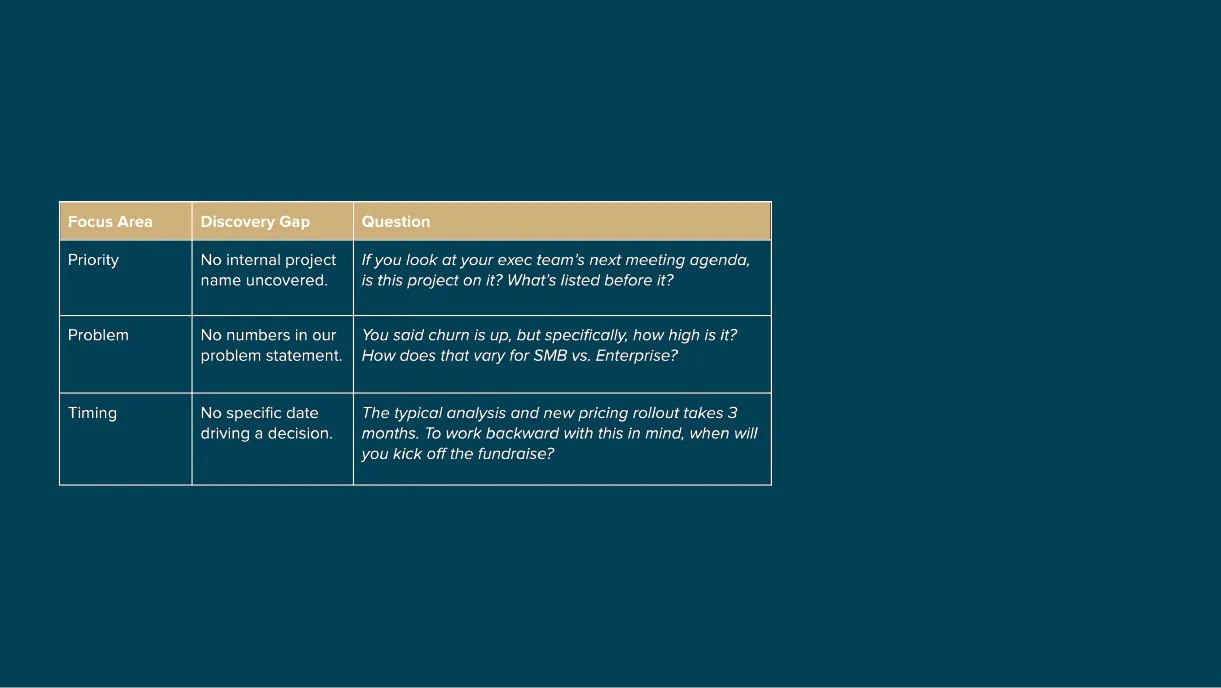

Draft with one click, go from DIY, to done-with-you AI
Get an executive-ready business case in seconds, built with your buyer's words and our AI.
Meet the sellers simplifying complex deals
Loved by top performers from 500+ companies with over $250M in closed-won revenue, across 19,900 deals managed with Fluint

Now getting more call transcripts into the tool so I can do more of that 1-click goodness.



The buying team literally skipped entire steps in the decision process after seeing our champion lay out the value for them.


Which is what Fluint lets me do: enable my champions, by making it easy for them to sell what matters to them and impacts their role.

