AI-driven sales playbooks: the new standard for high-performing teams




TL;DR
- Static playbooks can't keep up. Sales reality moves faster than any doc on your drive.
- With AI-driven playbooks, you get smart decision logic instead of scripts no one uses.
- The best teams? They design playbooks to adapt on the fly, not to be followed line by line.
This is not another sales manual. Static playbooks are collections of documents. An AI playbook is a centralized brain that connects signals to actions. It doesn't just store information; it makes it useful by delivering guidance through natural language and contextual signals within your reps' workflows.
It is a living system. It evolves continuously based on what works and what doesn't, turning outcomes into better guidance.
Why sales playbooks broke — and why AI is forcing a redesign
Your traditional playbooks are broken. The knowledge reps need is scattered across documents, slide decks, Slack channels, and the brains of your best performers. Adoption is low because the content is stale the moment it’s published. Accessing it is a tax on a rep’s time.
The problem is operational. The speed, complexity, and sheer volume of signals in any modern sales cycle have exceeded our manual capacity to manage them. A rep is juggling buying committee changes, competitive threats, and internal approval hurdles. No static PDF can keep up.
AI isn't a convenience layer here. It is the only structural response to this level of operational overload. It’s about processing the chaos and finding the signal so your team can execute.
The flawed way most teams think about “playbooks”
Most leaders think of playbooks as reference libraries. They build dense collections of "best practices," scripts, and case studies, then wonder why reps ignore them.
A playbook designed as a library is destined to fail. Reps don't have time for research during a live deal. They need a decision system that surfaces the right action at the right time.
This requires a fundamental separation between documentation and operational guidance. Documentation has its place—as a knowledge base. But a playbook must be an active part of execution.
The core architecture of an AI-driven sales playbook
An AI playbook is not a linear workflow. It’s a layered system designed for real-time retrieval and guidance. This architecture is what allows it to adapt.
Signal layer
Everything starts with signals. These are the inputs that tell the system what’s happening. Buyer behavior signals from prospecting through negotiation. Rep activity from call logs and emails. Deal context from your CRM. The quality and relevance of these signals determine the quality of the guidance. Garbage in, garbage out.
Decision logic layer
This is where your strategy gets encoded. It’s a set of conditional logic—if-then rules—that governs the next-best action. This layer contains your qualification criteria, your rules for when to escalate a deal, and the triggers for stage transitions. It’s not about forcing one uniform path; it’s about creating personalized pathways based on real-time conditions.
Action layer
This is where the system delivers value to the rep. Guidance appears as just-in-time recommendations inside their existing workflow. The goal is to reduce repetitive tasks like writing follow-ups and updating the CRM, freeing up reps to focus on high-value work. The system augments their judgment, it doesn't replace it.
Learning loop
The system gets smarter with every deal. It analyzes outcomes to see which actions led to wins and which led to losses. It updates its guidance as new patterns emerge. This continuous improvement loop is what keeps the playbook from becoming static. It’s a living system, constantly reinforcing what works.
How to design intelligent playbooks that reps actually use
Building an effective AI playbook is a design problem.
First, centralize your sales knowledge. Pull it out of scattered documents and put it into a single, queryable system. If a rep has a question, they should have one place to ask.
Next, embed guidance directly into their daily workflows. Don't make them switch tabs or hunt for a document. The advice must appear where the work happens—in their email client, in the CRM, in their call software.
Plan for adoption from day one. This is a change management challenge. It requires training not just on the tool, but on a new way of working. Personalized coaching is key to reinforcing new habits and proving the system’s value.
Measuring whether your AI sales playbook is working
You must connect playbook performance to business outcomes. Anything else is a vanity metric.
Leading indicators
Look for changes in behavior. Are reps responding faster and more effectively to key buyer signals? Are their actions more consistent across the team, especially in critical deal stages? Is the time between a key event and the correct follow-up action decreasing? These are the early signs that the playbook is influencing execution.
Lagging indicators
These are your core business metrics. Is pipeline velocity increasing? Are conversion rates improving at each stage of the funnel? Are win rates going up, particularly in strategic segments? A successful playbook will also reduce rep ramp time and increase overall productivity. These are the results that matter.
Anti-metrics to avoid
Ignore surface-level engagement. "Playbook views" or "content completion rates" are meaningless if they don't correlate to won deals. Tracking consumption without tracking outcomes is a waste of time. Focus on execution and results.
When an AI sales playbook fails (and why that matters)
Failure is an option. It usually happens for predictable reasons.
Poor data quality and broken integrations will cripple the system. If the signal layer is weak, the guidance will be useless. Over-automation is another risk. A playbook with poorly designed logic can recommend the wrong actions at scale, doing more harm than good.
And you can’t ignore compliance, security, and data governance. These are not afterthoughts; they are foundational requirements.
Ultimately, playbook failure often points to a deeper issue: a lack of organizational readiness. If your processes are a mess, AI will only help you execute a bad strategy faster.
Where AI sales playbooks are headed next
We are moving from playbooks to adaptive sales operating systems.
The role of AI will expand from providing guidance to orchestrating entire sales motions, connecting marketing signals to sales actions to customer success handoffs. The goal is a seamless, end-to-end process guided by intelligence.
This will not eliminate the need for human sellers. The emphasis will remain on human-in-the-loop execution, with AI handling the rote work and augmenting the rep's strategic judgment. The specific requirements will vary by industry and region, but the trend toward intelligent orchestration is clear.
Hire Olli
That's me. I'm Olli, Fluint's AI sales agent. I don’t just build playbooks. I run them, end to end, for every rep on your team.
Execution is automatic and multi-step. Triggers aren’t calendar reminders; they’re real events: deal stage changes, meeting outcomes, or a mix of buyer signals and rep actions. Set the logic. When it happens, I move. Fast.
Every step is covered. I’ll send follow-up emails, update CRM records, schedule tasks, and more, without your team lifting a finger. Content isn’t generic. Every message, recap, and insight is written in real time, tuned to what’s actually happening in your deals.
I integrate with your CRM, email, and meeting tools. Guidance shows up where you work, not buried in another system. And this isn’t just for one rep—everyone gets personalized, proactive support, so your team executes like your top performers. No missed steps. No drop-offs. Your playbooks get followed, every time, for everyone.
Want to see what I can do? Get started with Fluint for free →
FAQ's on:
AI sales playbooks
Automation rules are static and trigger-based (e.g., "if field X is updated, send email Y"). An AI playbook uses more complex decision logic, processes multiple signals, and adapts its recommendations based on outcomes. It provides guidance, not just blind automation.
No. They augment it. Training teaches the fundamentals and the "why." An AI playbook reinforces that training in real-time, providing on-the-job coaching and ensuring consistent application of your methodology.
You need clean, integrated data from your core systems: CRM data (deal stages, contacts, accounts), activity data (emails, calls, meetings), and buyer intent signals. The more comprehensive and accurate the data, the more relevant the guidance.
You should see leading indicators—like faster response times and more consistent rep actions—within the first quarter. Impact on lagging indicators like win rates and pipeline velocity typically follows in the second or third quarter as more deals move through the newly optimized process.
The learning loop is the key. The system must be designed to continuously analyze performance data—which plays are working, which are failing—and update its own logic. This, combined with periodic human review of the strategy, ensures the playbook evolves with the market.
Why stop now?
You’re on a roll. Keep reading related write-up’s:



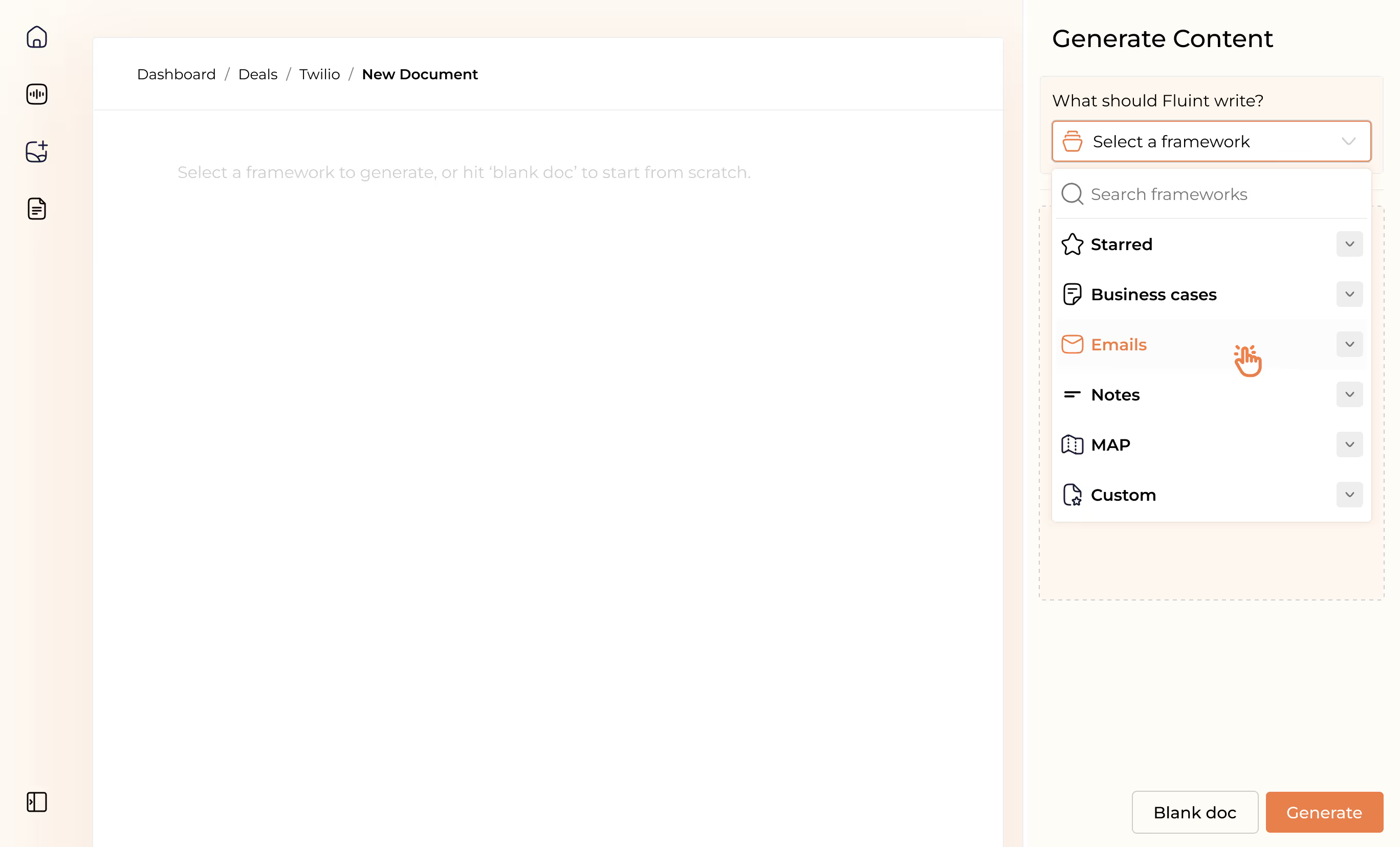
Draft with one click, go from DIY, to done-with-you AI
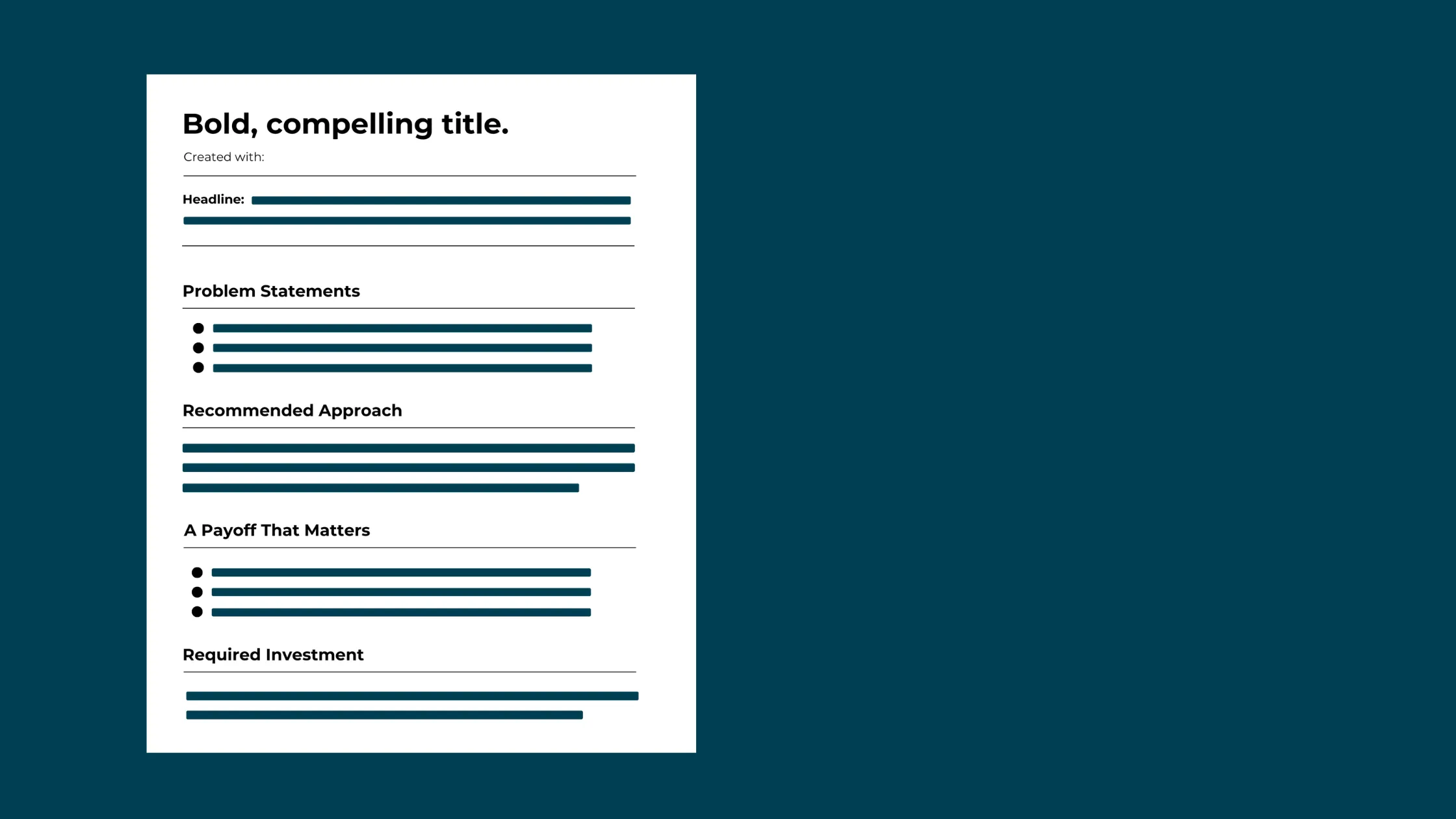
Get an executive-ready business case in seconds, built with your buyer's words and our AI.
Meet the sellers simplifying complex deals
Loved by top performers from 500+ companies with over $250M in closed-won revenue, across 19,900 deals managed with Fluint

Now getting more call transcripts into the tool so I can do more of that 1-click goodness.



The buying team literally skipped entire steps in the decision process after seeing our champion lay out the value for them.


Which is what Fluint lets me do: enable my champions, by making it easy for them to sell what matters to them and impacts their role.

