
Trace every play
to the conversions it causes






What decides a deal happens weeks and months before it's won or lost
The deciding moments come early
Who joins the second call, and whether the exec summary lands before the demo, happen long before anyone marks the deal won or lost.
Closed deals teach too slowly
Learn only from wins and losses and you're a quarter or more behind, with too few deals to separate the plays that mattered from the dozens that didn't.
An LLM can't weigh the signal
It can spot patterns in your deals, but it can't measure how much each play changed the odds of converting.
A tight feedback loop for long sales cycles with dozens of variables
A model trained on today's CRM data looks accurate and still misses live deals
Every play is weighted by its share of impact on stage conversion
The Fluint features that power the learning engine
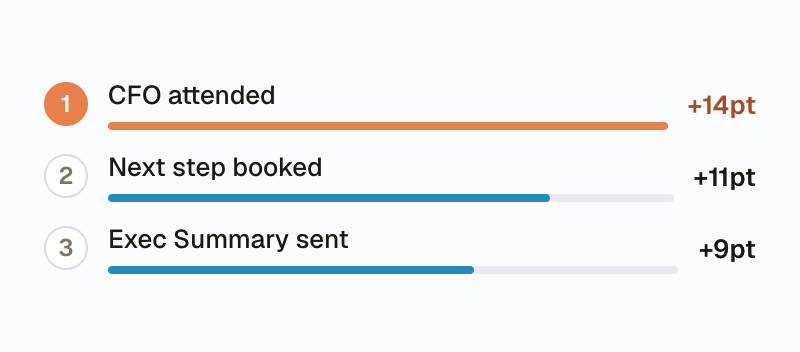
The deal behaviors the engine scores on every deal, at every date, by segment and stage.
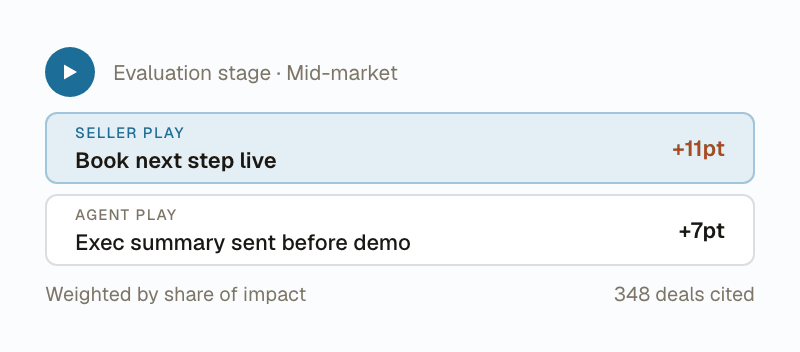
Every seller and agent play, weighted by its share of impact on stage conversion.
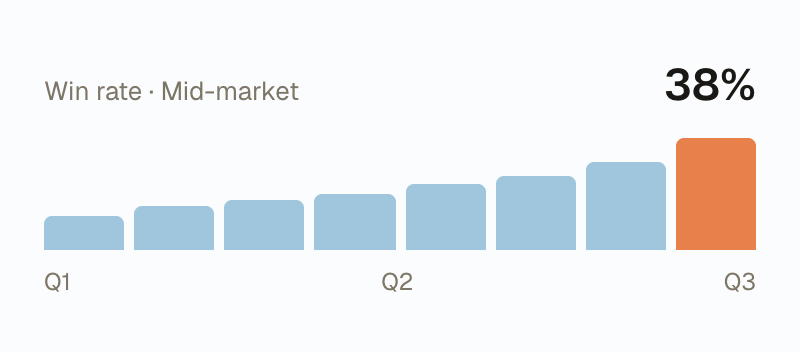
See which plays are converting deals across your whole pipeline, and the deals behind each result.
Learning engine FAQs
It runs as a loop. Fluint captures every change to every deal, rebuilds each deal by date, scores your predictors (deal behaviors like the CFO joining a call) at every date, measures what drives each stage conversion, credits every play with its share of that movement, serves the next play, and retrains as deals convert or close.
There's no minimum. Fluint imports your full CRM history and rebuilds the last 365 days when you connect, from whatever your CRM recorded. More history sharpens the weights, but you won't wait months for the first results.
It's win-loss analysis that runs every day, on every stage. Win-loss reviews look at closed deals once a quarter. Fluint scores every open and closed deal at every stage, so a play gets credit for moving a deal from discovery to evaluation months before the deal closes.
Conversation intelligence tells you what was said on a call, and a deal score gives you the odds a deal closes. Fluint measures which specific plays, across calls, emails, meetings, and CRM changes, actually caused your deals to convert at each stage, and how much each one moved the odds.
Find out which plays are converting your deals this week.
Start with 14 days free, worth up to $1,250. Connect Salesforce and your call recorder, and you'll see your first results in one session.