
We built the AI stack that revenue teams were going to need.
Revenue teams are adopting AI faster than any function in the enterprise. But the infrastructure underneath — the models, the context, the attribution — wasn't built for them. So we built it.
AI for revenue shouldn't mean renting generic models and hoping for the best.
The result: unpredictable spend, output your competitors also get, and no way to prove what any of it actually earned.
We built Fluint because we believed revenue teams deserved their own AI stack — one that learns from their data, compounds with their outcomes, and pays for itself.
Three layers. One system. Compounding every cycle.
Model
Loop
Agent
Engineering-led. Revenue-native. Built to compound.
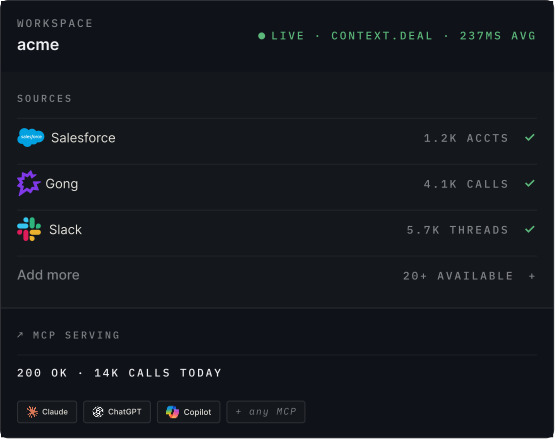
That's why Fluint's architecture looks more like a modern data platform than a sales tool. It's designed to be the system underneath your agents — not another agent bolted on top
Built by people who've scaled engineering and revenue systems.

Jon built and led architecture teams at JumpCloud, where he managed 500+ developers and shaped the DevOps practices that scaled the platform through hypergrowth. Nate built and scaled enterprise sales teams and go-to-market operations — watching revenue teams try to retrofit tools built for other functions.
Fluint came from a simple observation: revenue teams were about to face the same infrastructure challenges that engineering teams faced a decade ago. They'd need their own DevOps — a system for building, testing, deploying, and measuring the AI that runs their motion. We set out to build it before the gap became a crisis.