
One context graph
for how you sell and how your buyers buy






Every AI tool on your team is working from a different slice of the deal
Each tool sees one slice
Your notetaker knows what was said, your CRM knows the stage, and your inbox knows who went quiet.
An LLM can't join them for you
Hand it the whole CRM and it still can't tell that “IBM” and “International Business Machines” are one customer, or which buyer actually signs.
So agents fill the gaps with guesses
Each agent works from whichever piece it's wired to, and fills in the rest with answers that sound right.
A context graph models how you sell and how your buyers buy
Identity resolution and enrichment fill the gaps your CRM leaves
Pre-computed briefs give your LLM the right context in one call
The Fluint features that run on the context graph
Serve pre-computed briefs to any AI agent over MCP or API.
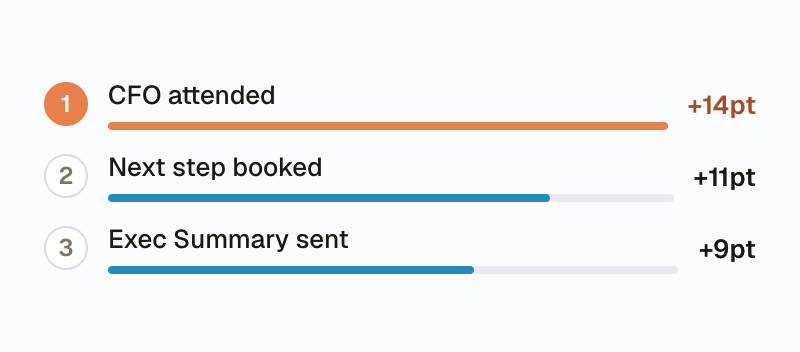
Turn what the graph records into predictors of which deals will convert.
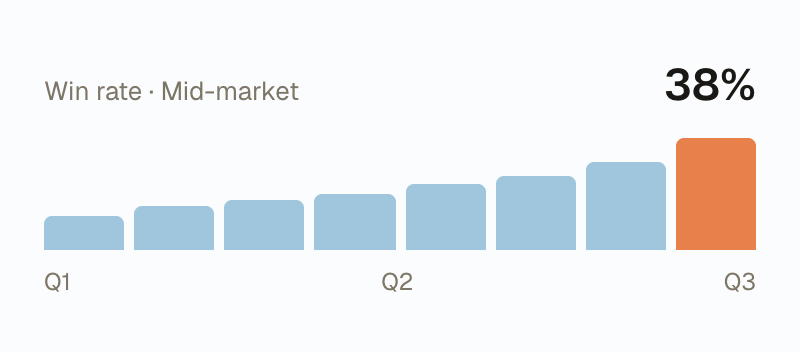
See your whole pipeline in the graph, with the source of every link.
Context graph FAQs
Salesforce or HubSpot, Gong or Salesloft, email, calendar, and Snowflake, so records like support tickets, subscriptions, and invoices join the same graph. Fluint takes every CRM field, imports your full history when you connect, and enriches what's missing.
They're related. A knowledge graph stores facts and how they connect, usually about the world in general. A context graph holds what's true about your own deals right now, resolved from your systems with the source of each fact attached, so a rep or an agent can act on it.
You can, and you'll get a fluent summary. But structuring the data costs more than reasoning over it, and the model won't know which records are the same buyer, which call belongs to which deal, or what your stages mean, so it guesses differently every time. A context graph does that structuring once and gives every agent the same answer.
No. Fluint does the context engineering for you (the connectors, identity resolution, enrichment, and classifications) and keeps it current as your data changes. If you do have GTM engineers, they can query the same graph over MCP or API instead of stitching sources together in a warehouse.
See your go-to-market as one context graph.
Start with 14 days free, worth up to $1,250. Connect Salesforce and your call recorder, and you'll see your first results in one session.