
Swan runs the work. Fluint shows you which work wins.
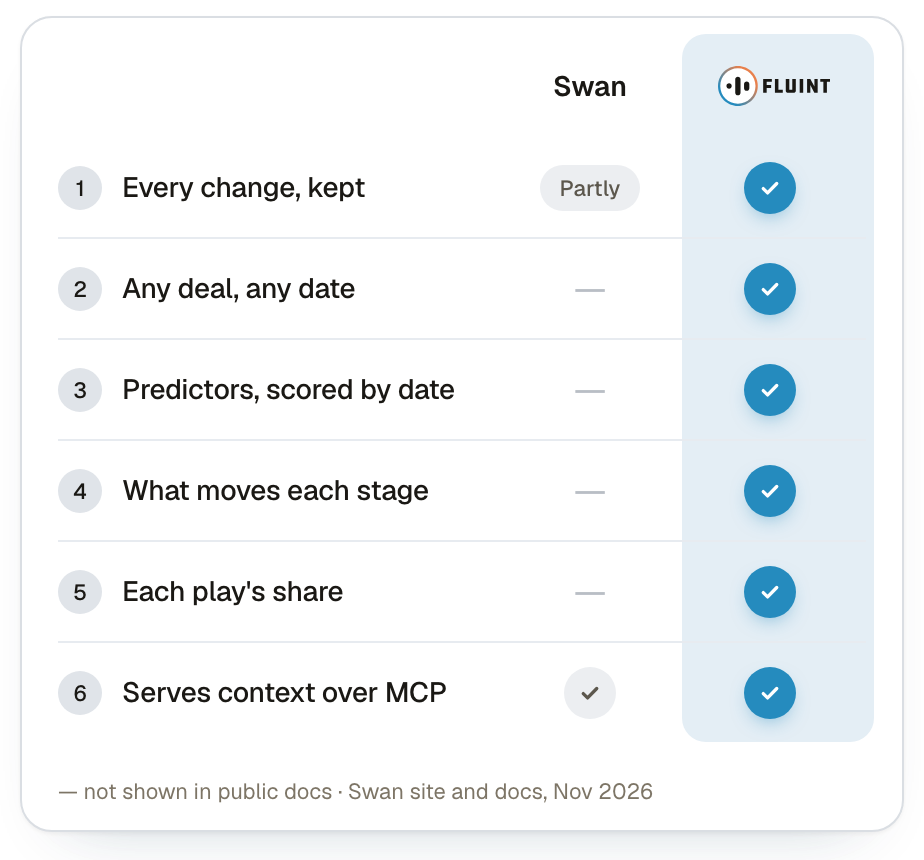
What's the difference between Swan and Fluint?
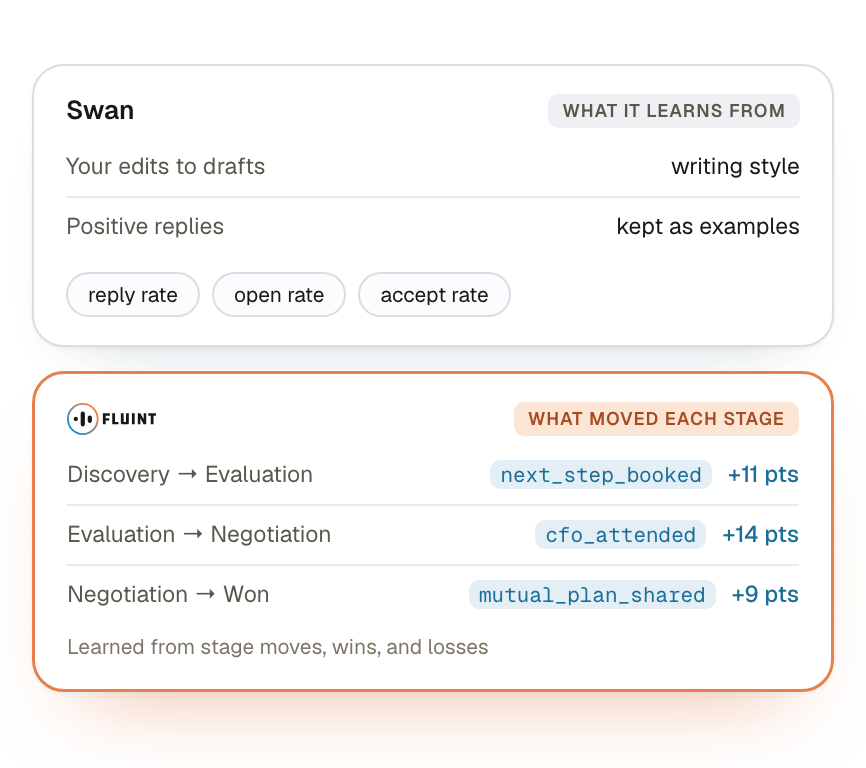
Does Swan learn which sales plays win deals?
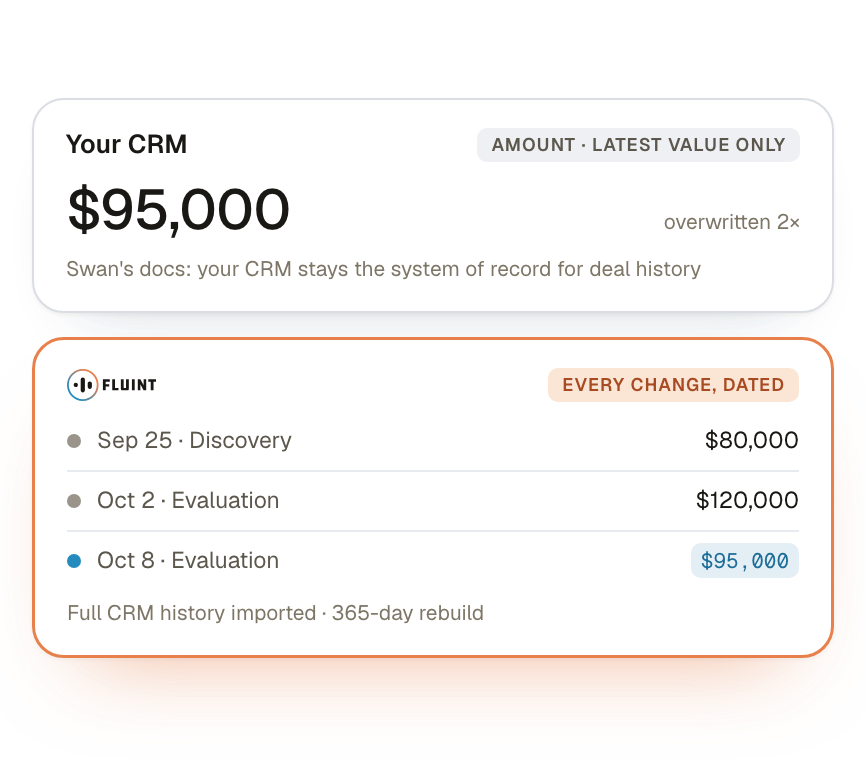
Does Swan keep your deal history?
Does Swan measure which plays drive pipeline and wins?
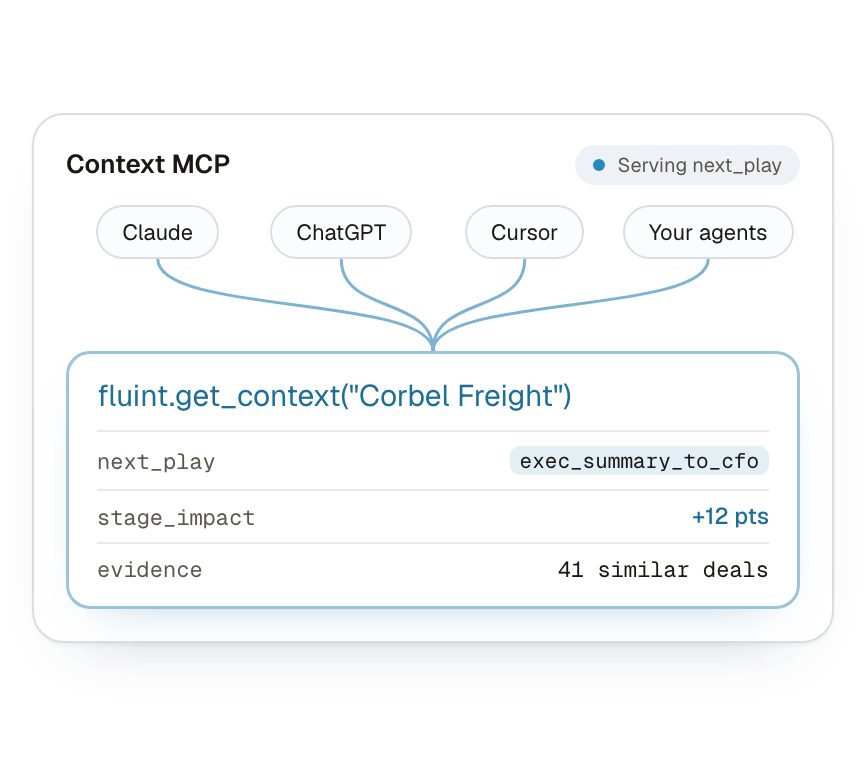
Can you use Swan and Fluint together?
Yes, because they do different jobs:
Swan finds the signal, researches the account, writes the outreach, and keeps HubSpot up to date.
Fluint watches what happens next, measures which plays move deals at each stage, and serves the next one over MCP.
Different jobs, same builders. If your GTM engineers already run Swan, Fluint gives them the outcome data to point it at.
“Fluint gave us months of AI engineering work with a single integration. Now everything we build is grounded in how we win, with the right context for every agent and seller.”

Fluint vs Swan: running the work, and learning what wins


Based on Swan's public site and docs as of November 2026. See something out of date? Tell us.
Common questions about Swan and Fluint
It's a shared memory that Swan's agents read and write for each account, and it's a good one. The difference is what it learns from: Swan learns your writing style from edits, and Fluint learns from revenue outcomes at every stage.
It might. Swan's automatic activity logging, record creation, and triggers are HubSpot-only today. Fluint reads Salesforce and HubSpot natively.
There's no minimum time on Fluint. It uses the deal history already in your CRM and rebuilds the last 365 days when you connect.
When your gap is pipeline generation: signals, research, enrichment, and outreach, run by agents without stitching five tools together. Swan is fast to set up and inexpensive to start.

Let’s see if there’s a good fit
We’ll look at how other GTM teams are already: